Where Your Stop Actually Sits: The Mistake Most Traders Make
A stop is an order that sits at a price level where other traders have already placed their own orders. It does not protect a position; it simply waits for a matching order to arrive.
Orders, not forecasts
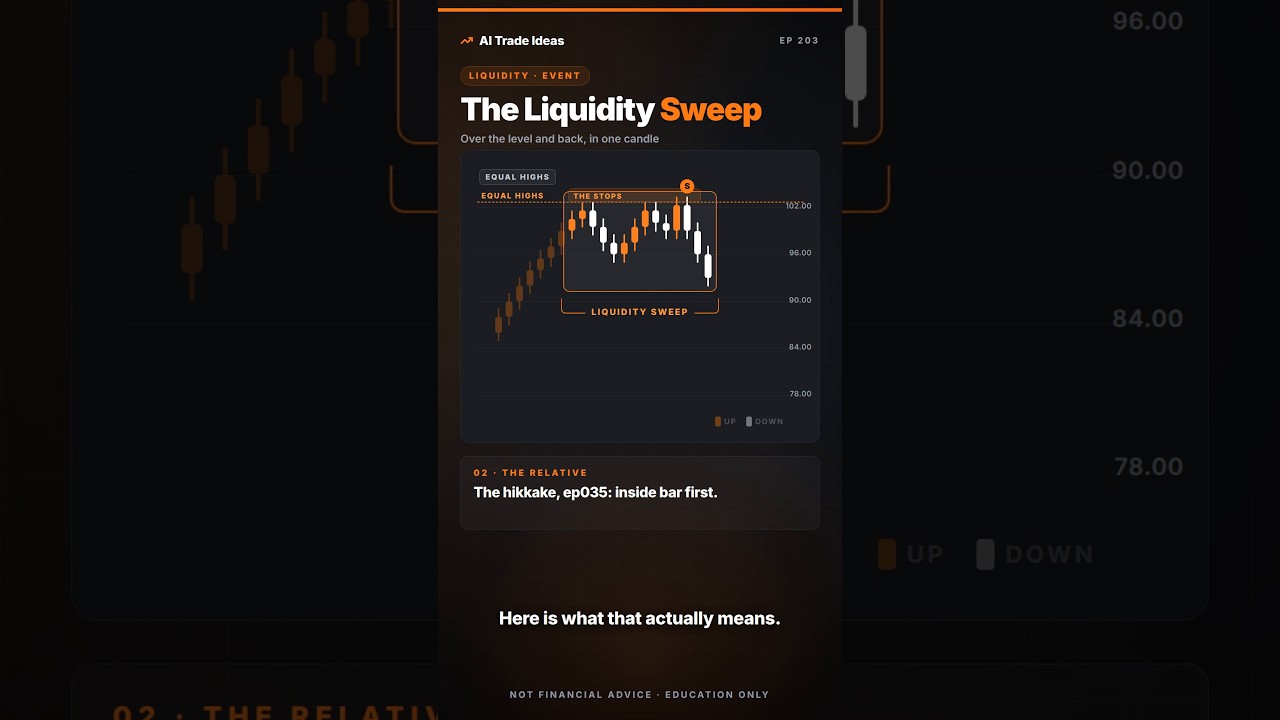
Traders place stops at obvious levels because that is where liquidity already exists. The stop does not predict where price will go; it records where other participants have chosen to exit. When price reaches that level, the order is filled if a counterparty is present, nothing more.
A habit, not a law
Stops are repeated actions, not rules that price must obey. Because many traders set them at the same visible points, those points become magnets for order flow. The placement itself creates the liquidity that later fills the orders. The habit is shared; the outcome is not guaranteed.
No published count
No one outside the exchange sees the exact number of stops resting at any level. Without that count, traders cannot know how much liquidity is truly available. The absence of public data keeps the level from becoming a reliable target or a confirmed support.
Where liquidity actually forms
Liquidity appears where clusters of resting orders already sit. Those clusters are created by the same visible reference points that most traders use for stops. When price moves to those points, the orders interact with whatever flow is present at that moment. The interaction is mechanical; it does not require intent or coordination beyond the orders themselves.