Rising Wedge: Reversal or Trap?
A rising wedge is a chart pattern formed by two upward-sloping lines that converge. Price action squeezes higher between them until one side gives way.
What forms the pattern
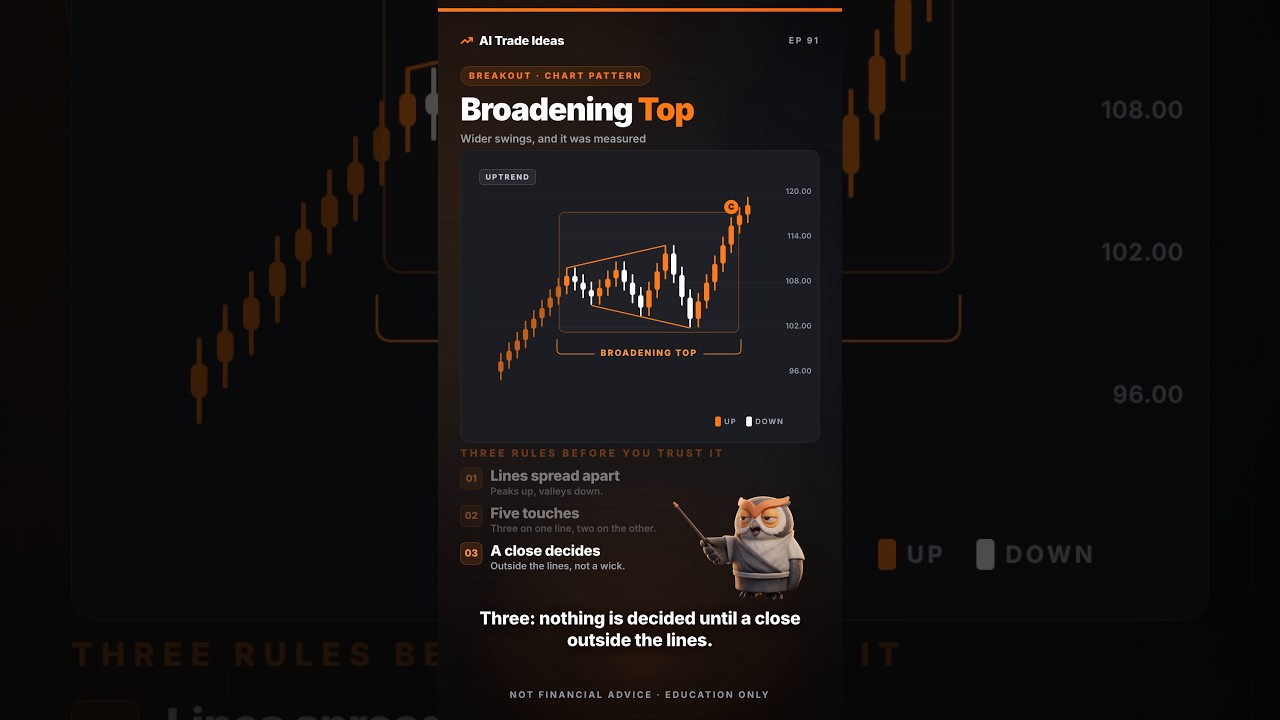
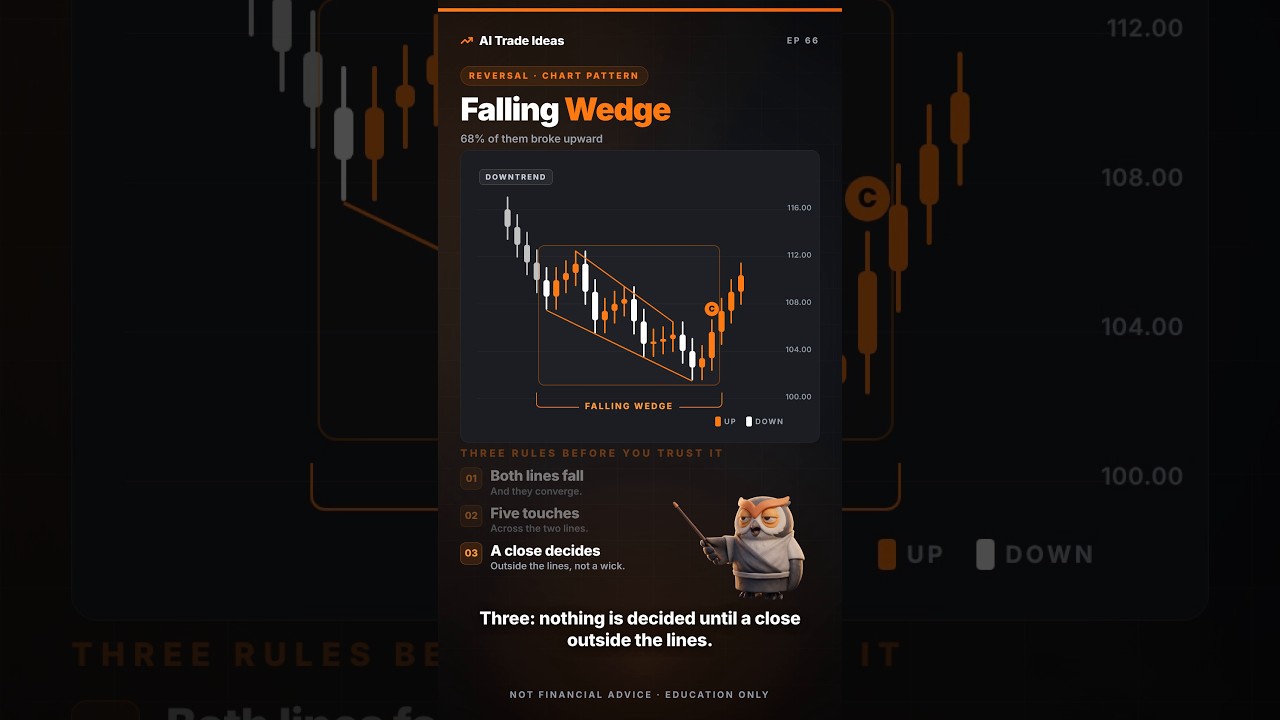
Both lines must rise, and the lower line must be steeper than the upper line. The pattern needs at least five touches across the two lines combined. Price oscillates inside the narrowing channel until it either breaks or continues to test the boundaries.
Confirmation
A decisive close outside either boundary is required before the pattern is considered complete. Traders wait for that close rather than acting on intraday penetration or wick violations. The breakout direction determines whether the wedge resolves higher or lower.
How it fails
The common error is assuming a downward break will produce a large decline. Downward breakouts from rising wedges rank last among 36 chart patterns for magnitude of move. When price breaks lower, the follow-through is frequently small, and the pattern can quickly reverse back inside the original lines.