The Channel: Signal or Noise?
A channel is a pair of parallel lines that contain price between them, each line drawn from at least two touches and kept at the same slope so the distance between them never changes.
What forms it
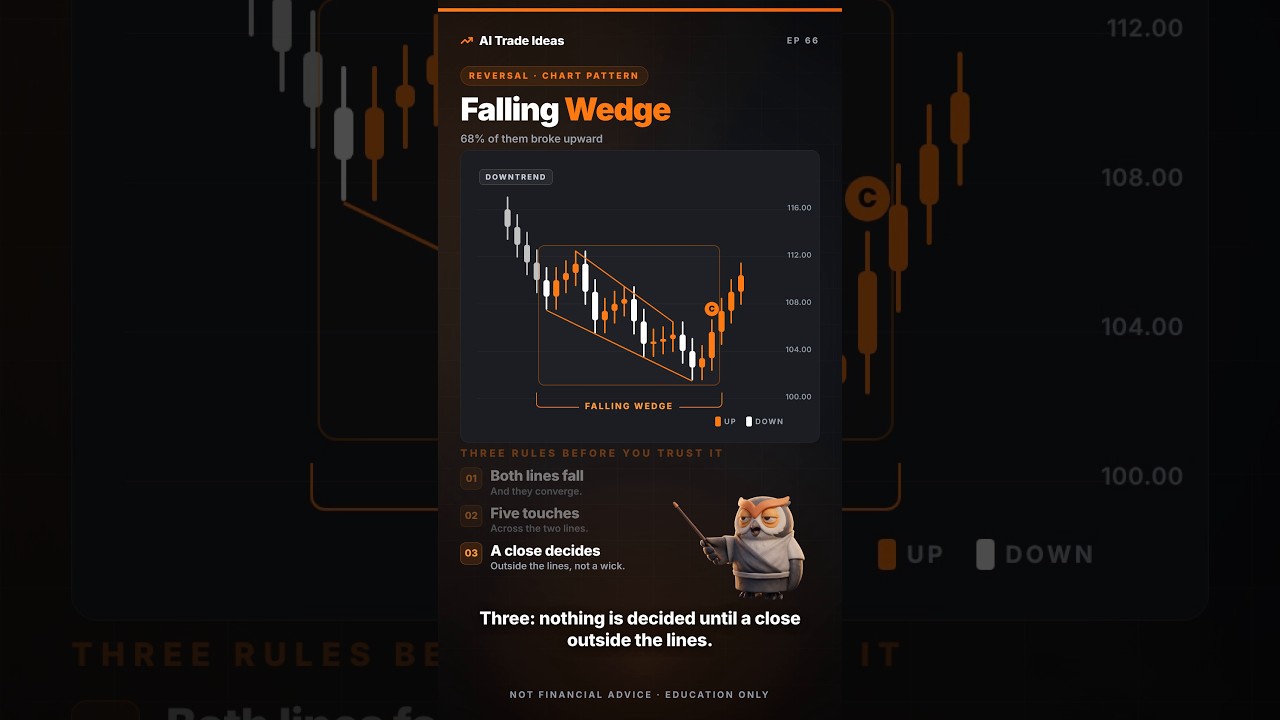
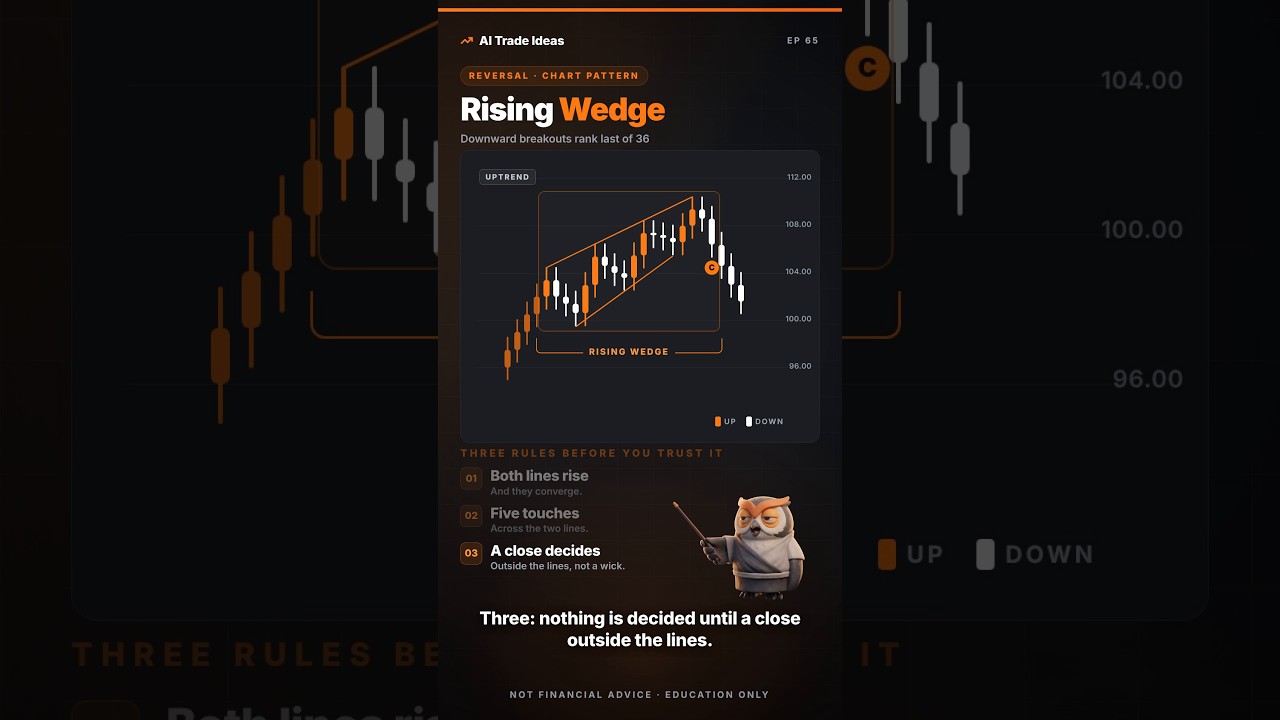
Price must respect both lines without breaking the slope. The upper line is drawn from two or more swing highs, the lower line from two or more swing lows, and the two lines must remain parallel. When either line is touched a third time and price reverses, the channel is considered confirmed. A close beyond either line ends the pattern; a mere wick does not.
What confirms it
Confirmation is only the close. If price closes above the upper line or below the lower line, the channel is no longer valid. Until that close occurs, the pattern remains intact even if price briefly pierces a line. Flat, horizontal lines are excluded; they form a rectangle whose boundaries are measured by price levels rather than slope.
How it fails
The channel fails the moment price closes outside either boundary. Traders who treat any two roughly parallel lines as a channel, or who accept a flat range as one, are applying the label where the rules do not hold. Once the close breaks the structure, the channel is discarded.