Falling Wedge: The Mistake Most Traders Make
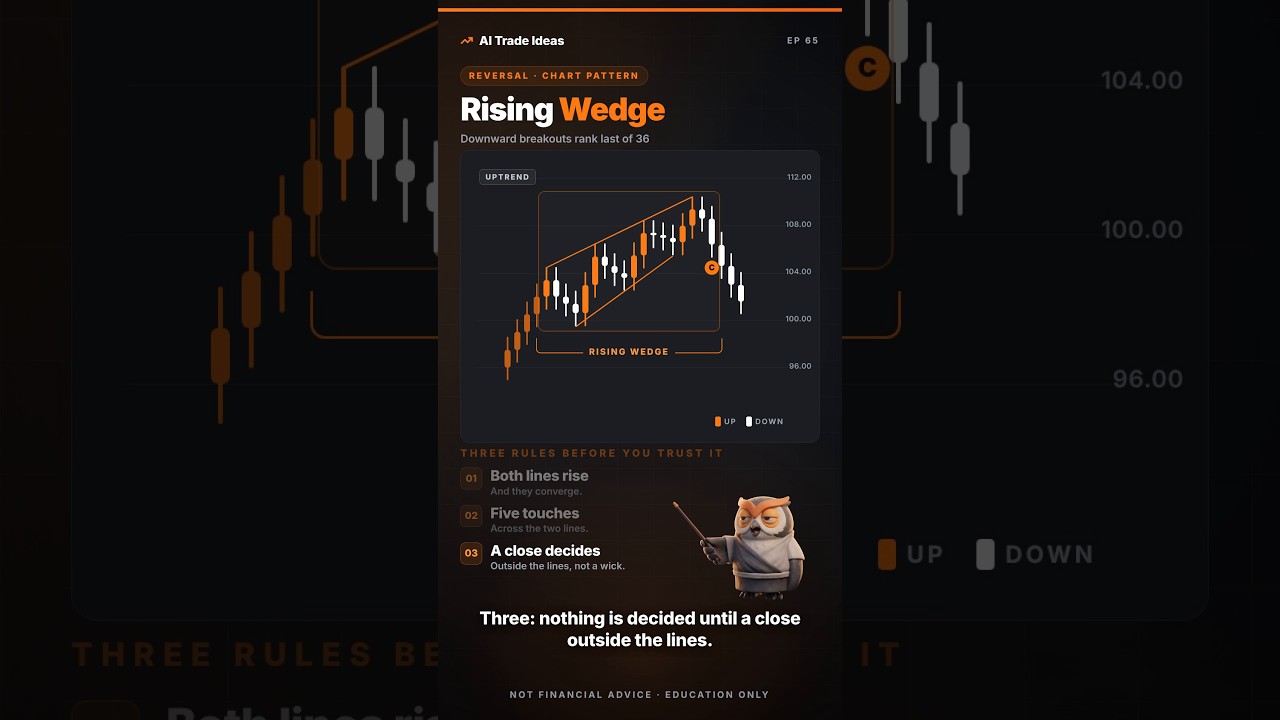
A falling wedge is a chart pattern formed by two downward-sloping lines that converge, with price action contained between them. The pattern is defined by three rules: both lines must fall, the price must touch the lines at least five times, and a decisive close beyond one of the lines confirms the breakout.
What forms the pattern
Price creates the wedge when successive lower highs and lower lows are connected by two declining trendlines. The upper line connects the lower highs, while the lower line connects the lower lows. Both lines slope downward, but the upper line descends at a steeper angle, causing the two lines to converge. The pattern requires at least five touches across both lines to establish its validity.
How confirmation works
A close beyond either boundary line serves as the signal. When price closes above the upper line, the pattern is considered resolved to the upside. When price closes below the lower line, the pattern is resolved to the downside. The confirmation comes solely from the close, not from the direction of the preceding trend or any other factor.
The common misreading
Many traders assume that because both the price and the lines are falling, the pattern must continue downward. This assumption overlooks the fact that the converging structure itself can resolve in either direction once the boundary is broken. The pattern carries no inherent directional bias until the confirming close occurs.