The Bull Flag: Explained Simply
A bull flag forms after a sharp upward move followed by a brief sideways drift that stays above the low of the pole. The pattern is complete only when price closes above the upper boundary of that drift.
What forms the pattern
A steep pole appears first: price climbs quickly with little overlap between bars. After the pole, price drifts sideways or slightly lower for several bars, but the drift stays shallow and never drops below the pole’s starting point. The bars in the flag itself are small and overlapping, showing reduced participation rather than active selling.
Three rules before trust
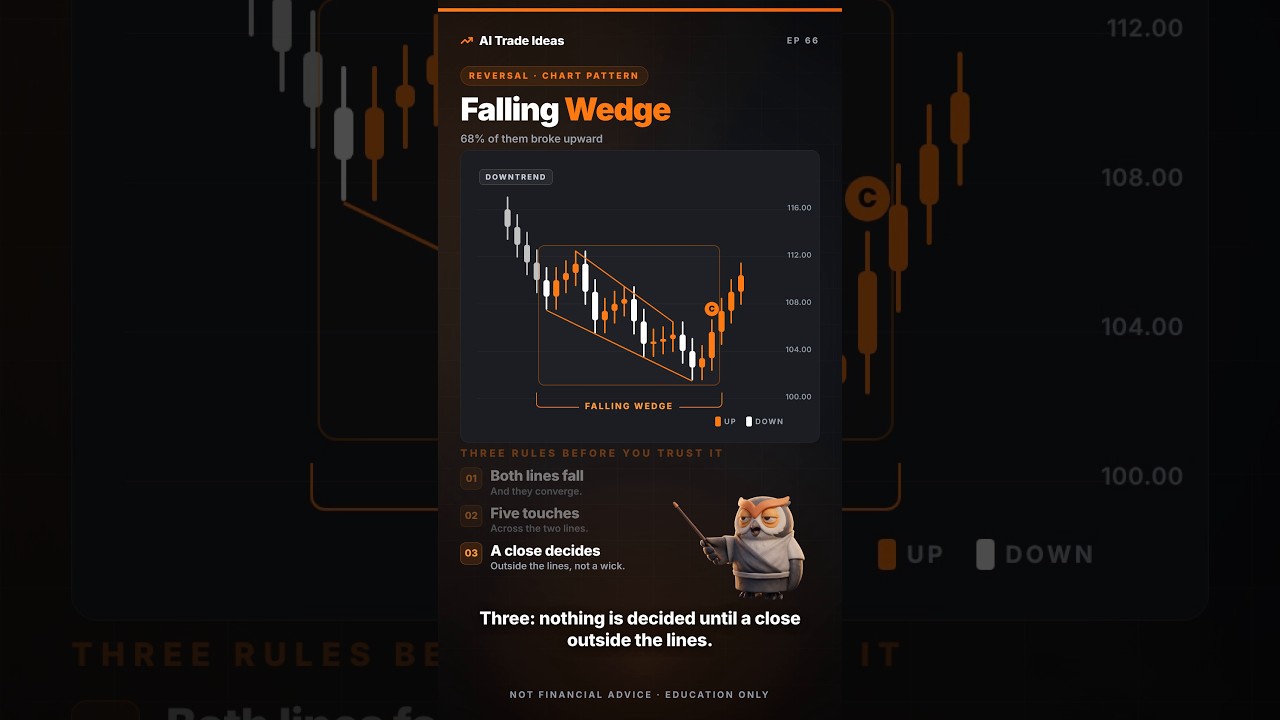
The pole must be steep; a gradual climb does not qualify. The pullback must be a drift, not a decline that retraces a large portion of the pole. Finally, a decisive close above the flag’s upper line is required before the pattern is considered complete; until that close occurs, the structure remains unconfirmed.
How it fails
When traders label any pullback a flag, they overlook the difference between a shallow drift and a deep, slow retracement. A deep retracement that moves well below the pole’s midpoint is simply a pullback and does not meet the pattern’s requirements. Without the steep pole, limited drift, and confirming close, the setup is invalid.